Saratoga Springs, NY · Garage Door Service
What That Grinding or Banging Door Is Telling You
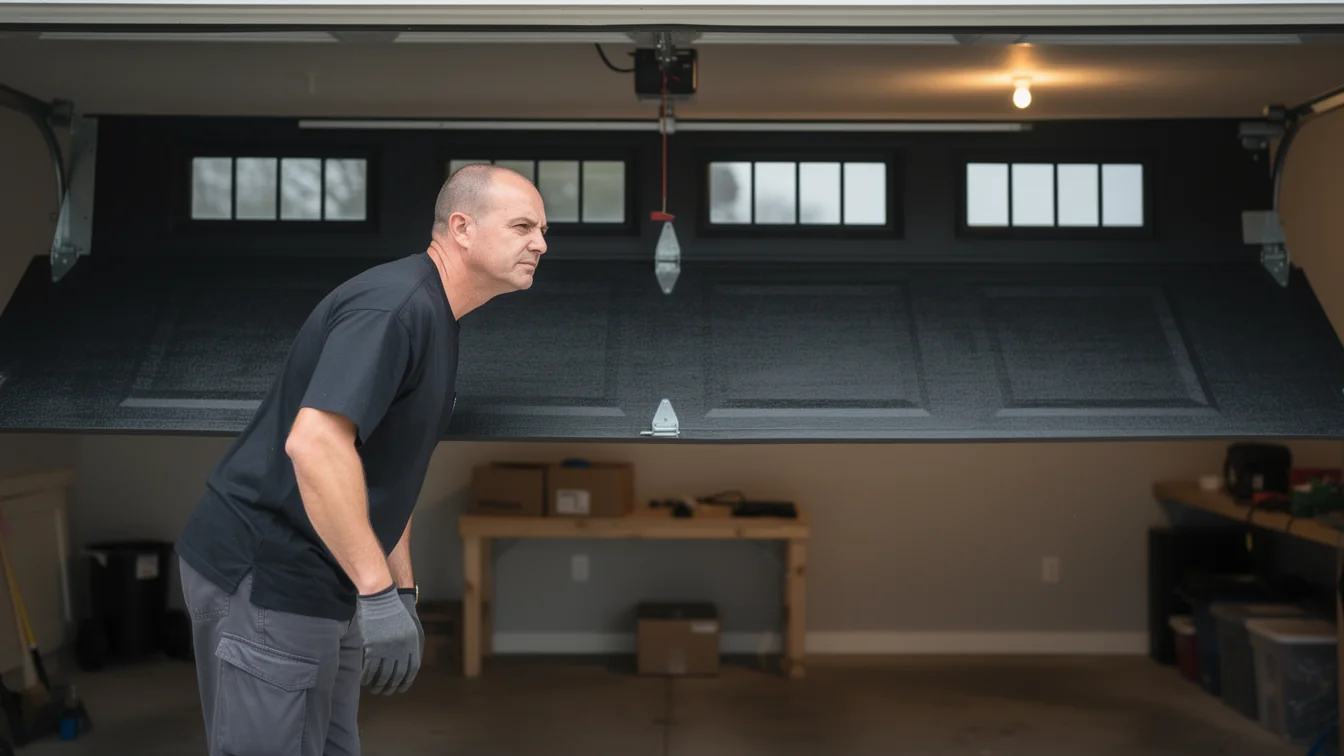
Saratoga Springs houses, many built before 1960, often still run original torsion springs that groan, grind, or bang once severe cold grips the steel parts.
- Repairs & new doors
- Springs & openers
- Serving 5 nearby communities
The Common Mistake
The mistake we see most in Saratoga Springs is writing off door noise as a sign the door is simply old, the way you'd write off a creaky staircase. That assumption holds up less here than it does in a town built mostly after 1980. Saratoga Springs housing runs from 1938 to 2001, with the median landing around 1956, and most of the 28 named areas in this service territory are still carrying pre-1960 stock. That means a lot of doors are still on the original torsion hardware the builder put in, not a replacement system from the last couple decades. A squeal or a thud on a door that age isn't background noise - it's a part telling you it's near the end of its rated cycles. Treating it like normal wear instead of a specific part failing is how a $200 spring call turns into a trapped car and a Saturday spent waiting on parts. The fix isn't complicated: listen for what changed, not just that something is making noise, and match the sound to the part instead of assuming the whole door is simply getting old.
The Situation
Across this service area there are 73,519 households and 36,443 owner-occupied houses, and a large share of them sit on hardware installed when the house was built, not hardware replaced on any kind of schedule. Torsion springs have a rated cycle count, but almost nobody tracks cycles on a residential door - you find out it's done when it snaps, usually with a bang loud enough to bring you out of the kitchen. On a house from the 1950s or 60s, that spring has likely never been swapped. Rollers, too: steel rollers original to a pre-1960 door grind against the track in a way nylon rollers don't, and that grinding gets worse, not better, with time. The practical situation is this - if your house is on the older end of this area's stock, the hardware under stress is original hardware, and original hardware doesn't fail gently. It fails the week it's under the most load, which in this part of the country means a cold snap, not a mild afternoon.
How Local Conditions Play In
Saratoga Springs sits in a climate zone classified as severe cold, and that matters more for a garage door than people expect. Steel contracts as the temperature drops, and a torsion spring under tension behaves differently cold than it does at 70 degrees - the metal is less forgiving, and a spring that's been quietly fatiguing all year is far more likely to go in January than in July. Old grease and lubricant on original rollers and hinges also thicken in deep cold, which is part of why a door that ran quiet in September starts grinding or hesitating once the real cold sets in. If you hear a new scrape, a bang on opening, or a door that jerks instead of gliding right as the weather turns, that's not coincidence - that's the cold finding the weak point in hardware that's already older than the warranty it came with. This is the piece that gets missed: the noise usually shows up right when the part is closest to failing, because cold is the stress test, not the cause.
Doing Nothing For Now
Here's the honest part: not every noise needs a same-day call. A light rattle from a loose bracket, or a hinge that squeaks but moves freely, can usually wait a few weeks without turning into anything worse - we'd rather you save the service call for something that actually needs it. What can't wait is a grinding sound that's new, a bang or loud pop, or a door that jerks unevenly as it travels, especially on a house built before 1960 running original torsion hardware. Those are signs the spring or cable is near the end, and on a door that old, waiting through a cold snap is how a repair turns into someone getting hurt trying to force it open by hand. If you're not sure which kind of noise you've got, describe it when you call rather than guess - what it sounds like and when it happens tells us more than the age of the house alone.
Frequently asked questions
My garage door has started grinding only in the last few weeks - is that the cold or something breaking?
Both, usually. Cold thickens old grease and makes steel less forgiving, which is exactly when a spring or roller that was already wearing out starts to make itself heard. If the grinding is new and getting louder, don't wait out the winter to find out which one it is.
Is it normal for an older Saratoga Springs house to still have the original spring?
Very common. A lot of this area's housing dates to before 1960, and torsion springs aren't something most homeowners replace on a schedule - they get replaced when they break. If your house hasn't had the spring swapped, it's likely still running what the builder installed.
Can I just oil the hinges and rollers myself to quiet it down?
That can help with a mild squeak, but it won't fix a grinding sound coming from a worn roller or a spring losing tension. If oiling doesn't quiet it within a day or two, the noise is coming from a part, not a lack of lubricant.
How cold does it actually need to get before a door starts acting up?
We don't have a specific temperature threshold to give you, but this area sits in a severe cold climate band, and the pattern we see is doors acting up once a sustained cold snap sets in, not during a single cold morning.
Related garage door services in Saratoga Springs
More garage door guides
Book garage door service in Saratoga Springs
Call now or request a quote - tell us what the door is doing and where you are.