
Saratoga Springs, NY · Garage Door Service
The Garage Door Mistake Saratoga Springs Owners Keep Making
Saratoga Springs homes built 1938-2001 face a specific garage door mistake tied to cold winters and original hardware. Here's what actually matters now.
- Repairs & new doors
- Springs & openers
- Serving 5 nearby communities
The Common Mistake
The mistake we see most in Saratoga Springs isn't neglect - it's treating an old door like a new one. A lot of houses here went up between 1938 and 2001, with the median landing around 1956, so what's hanging on the track is often the original torsion spring and the original rollers, not a replacement. Owners hear a grind or a slow close and reach for a can of spray lubricant, which helps for about a week and then the noise comes back worse.
The real issue on a door this old usually isn't the noise, it's fatigue. A torsion spring wound in 1956 has gone through close to seventy winters of expansion and contraction. Steel doesn't fail gracefully - it holds fine for years and then lets go on a cold morning, usually when someone's hand is near the bottom bracket. Lubricant doesn't fix metal fatigue. It just quiets it down long enough to make you think you're fine.
If your house is part of the older stock that makes up most of this area, the question to ask isn't "what's the noise" - it's "how old is the spring and track, and when did either last get swapped." That answer tells you more than any sound the door makes.
The Situation
The service area around Saratoga Springs covers roughly 73,519 households, with about 36,443 of those owner-occupied houses - and the bulk of that stock sits in the pre-1960 range. That's not unique to one block; it's the pattern across the named areas nearby too. Milton is 4 miles out, Ballston Spa and Malta both about 6 miles, Round Lake 9 miles, Ballston 10, Stillwater and Country Knolls around 11 - all of them carrying similar-era housing with similar-era doors.
Median household income across the area runs $79,894, which matters here for a plain reason: it's enough to make a full door replacement a real option rather than a stretch, but not so high that people are swapping out working hardware for no reason. Most of the calls we'd expect from a house this age are repair calls first - a spring, a cable, a bent track - with replacement only coming up once the door itself, not just one part, is past its working life.
The spread of distances matters too. A door built in 1958 in Saratoga Springs and a door built the same year in Corinth or Greenwich are dealing with the same winters and the same age-related wear, even though they're 13 to 16 miles apart. The housing age is the common thread, not the address.
How Local Conditions Play In
Saratoga Springs sits in a climate band the federal data marks COLD severe, and that's the part that turns an aging door into an active problem instead of a cosmetic one. Steel contracts in cold. A torsion spring that's been losing tension for years will feel fine in August and then bind or snap in January, because the metal is tighter and less forgiving at 10 degrees than at 70.
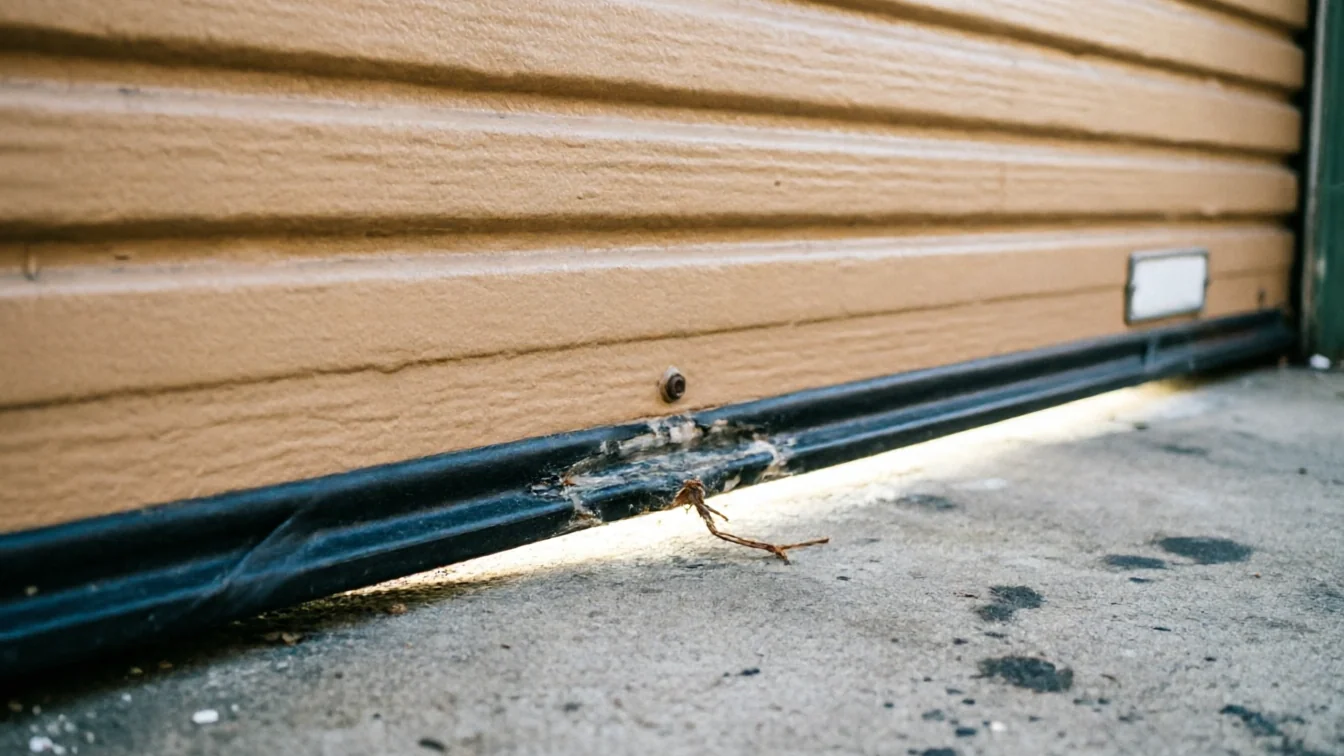
This is also where weather seals and drafts come in. On a lot of the older stock here, the bottom seal and the side weatherstripping were never upgraded along with anything else, so you get cold air pulling in along the bottom edge and around the frame even when the door looks like it's closing all the way. That's not a structural problem, it's a sealing problem, but it drives up the gap between what the thermostat reads in the garage and what it reads in the house next to it.
Track hardware reacts to cold too. Metal brackets that have shifted slightly over sixty-some winters tend to bind worse once the temperature drops, which is why a door that rolled smooth in October can start catching by December. None of this is dramatic. It's just what happens to old steel in a place that gets real winters.
Doing Nothing For Now
Not every noise or stiff spot means you need a new door, and it's worth saying plainly: sometimes the right move is to wait. If the door still opens and closes on both sides evenly, the spring isn't visibly stretched or gapped, and the noise is new rather than constant, a basic adjustment or lubrication service can genuinely buy you time - sometimes a season, sometimes a few years.
Where we won't pretend there's a shortcut is parts availability on the oldest doors. Original hardware from the 1950s and 60s era wasn't standardized the way modern torsion systems are, and matching a replacement spring or bracket to a door that old sometimes takes longer than people expect, because the part simply isn't a stock size anymore. That's a real limitation, not a sales pitch - if your door is in that category, plan for lead time rather than same-day fixes.
The honest line: if the door is functioning and the hardware isn't visibly failing, you don't owe it a repair call just because the house is old. Wait until something actually changes - a new sound, a door that drops unevenly, a spring that looks stretched - and deal with it then.
Frequently asked questions
Why does my garage door in Saratoga Springs act up more in winter?
Steel springs and track hardware lose flexibility as temperatures drop, and Saratoga Springs sits in a climate zone marked severe for cold. On older doors with original hardware from the 1938-2001 building era common here, that seasonal tightening is often what turns a minor stiffness into a snapped spring or a door that won't roll smooth.
Is my door's age actually a problem, or just cosmetic?
It depends on the part. A dated-looking panel is cosmetic. A torsion spring or track bracket that's decades old and shows wear, rust, or uneven tension is a safety issue, not an appearance one. Given most housing in this area dates to before 1960, checking hardware age matters more than checking how the door looks.
Should I replace the whole door or just fix the spring?
If the panels, tracks, and opener are sound and only the spring has failed, a spring replacement is usually the practical call. Full replacement makes more sense once multiple systems - door, track, and opener - are all original and failing around the same time, which is common on houses built in the 1950s.
Can weatherstripping fix the cold draft at the bottom of my door?
Often, yes. A lot of the draft at the bottom edge on older Saratoga Springs houses comes from worn or outdated weather seals and drafts at the frame, not from the door panel itself. Replacing the seal is a smaller job than replacing the door and can close most of that gap.
Related garage door services in Saratoga Springs
More garage door guides
Book garage door service in Saratoga Springs
Call now or request a quote - tell us what the door is doing and where you are.