Saratoga Springs, NY · Garage Door Service
Is Your Saratoga Springs Garage Door Worth Fixing, or Done
Saratoga Springs homes mostly date 1938-2001. Here's how that housing stock and our cold climate decide whether your garage door is worth repairing or replacing.
- Repairs & new doors
- Springs & openers
- Serving 5 nearby communities
The Common Mistake
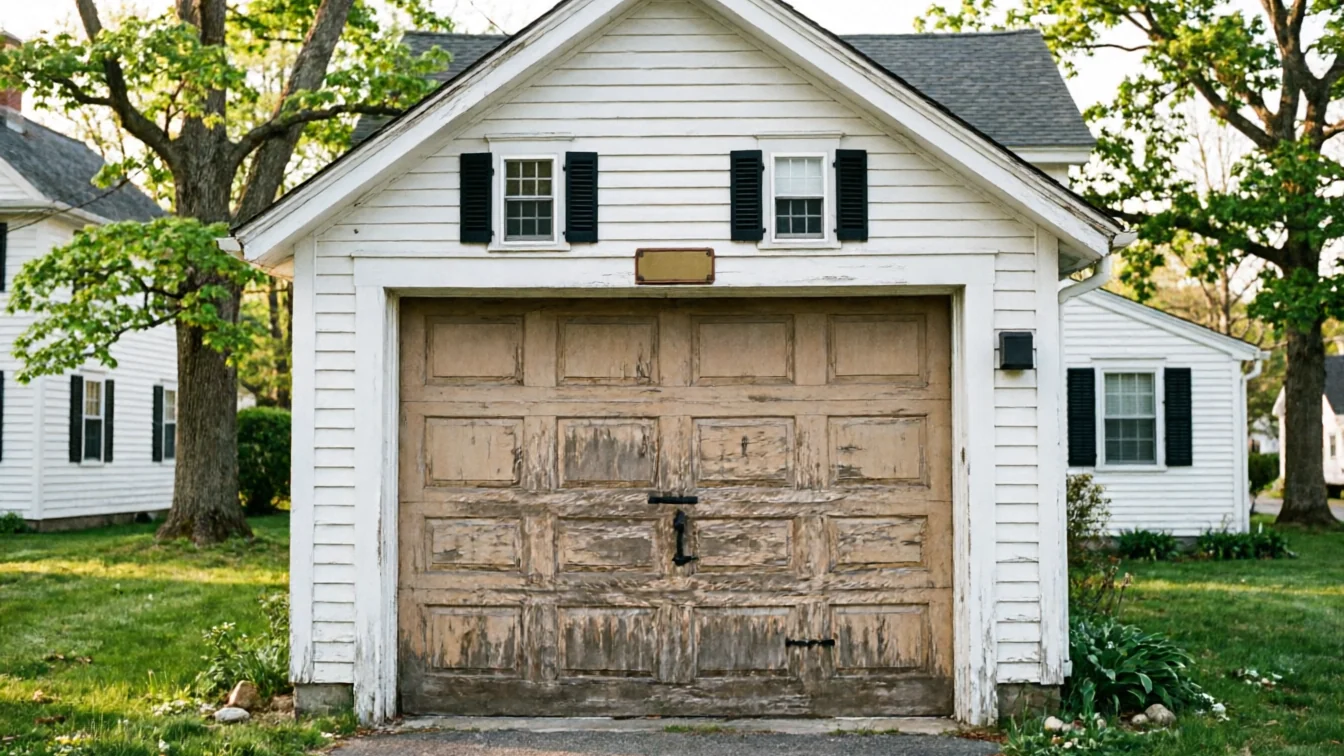
The mistake we see across Saratoga Springs is treating every broken door the same way: spring snaps, call for a new opener and a new door, done. That's backwards. A door is a system of parts with different lifespans, and on a lot of the housing stock here - built between 1938 and 2001, with a median year around 1956 - the door itself may be newer than the house even if it looks tired. We've pulled doors that were replaced once already in the 1980s or 90s, with track and hardware that's perfectly serviceable, where the only failure was a spring or a roller. Swapping the whole unit on that door wastes money. The other mistake runs the opposite direction: patching a door that's actually original to a mid-century house, where the steel has thinned, the seams have opened, and every repair is a temporary fix on a door that's done its job for sixty-plus years. Knowing which situation you're in before you call anyone matters more than any brand of replacement door.
The Situation
Saratoga Springs and the towns around it - Milton, Ballston Spa, Malta, Round Lake - sit on housing stock where pre-1960 construction is common across the named areas in this region, not just downtown. That means a real share of garage doors in this market are either original builds from that era or first-generation replacements from decades ago. Original doors from the 1950s and 60s were often single-layer steel or wood panel, hung on hardware that predates the rise of extension-spring retrofits. When one of those fails, the question isn't just "spring or panel" - it's whether the track, drums, and jamb brackets were ever upgraded to handle a modern torsion system. A lot of them weren't. On the newer end of that 1938-2001 range, you've got doors built with insulation and better seals from the start, and those are usually worth keeping alive with part replacement rather than full swaps, since the bones are sound and the age difference from a brand-new unit is mostly cosmetic.
How Local Conditions Play In
This area sits in a cold, severe climate zone, and that changes the math on repair versus replace more than people expect. Cold cycles stress steel seams and rubber seals in ways a mild climate never would - metal contracts, gaskets harden, and a door that's borderline in October can bind or crack by February. On an older door already showing panel rust or a sagging bottom section, a hard winter is often what turns a minor issue into a total failure, because the door has no flex left to absorb the cold. That's why we weigh climate exposure alongside age when we look at a door: a 1960s door that's been kept dry and out of direct weather can still be worth fixing, but the same door facing a full Saratoga winter with a failing seal is working against itself every day it's cold outside. We factor that into any repair-or-replace call rather than just looking at the dent count.
Doing Nothing For Now
Sometimes the honest answer is to wait. If your door is operating, closing flush, and the spring and cables are intact, there's no reason to replace it just because it's old - plenty of doors from the 1950s through the 80s in this area are still doing fine work with nothing more than a new roller or a re-lubed hinge. Where we draw the line is anything load-bearing: springs under tension, cables, and the drums they wrap around. Those don't get a wait-and-see. One honest limitation on our end - we don't carry every obsolete hardware size for the oldest original doors in this area, so if your door dates to the first wave of construction here, there can be a short wait on a matching part rather than a same-day fix. That's worth knowing before you call, not after.
Frequently asked questions
Is it worth repairing a garage door from a 1950s or 60s Saratoga Springs house?
Often yes, if the track and frame are sound and the only failure is a spring, cable, or roller. The steel panel itself can last decades if it hasn't rusted through. We look at the whole system before recommending a full replacement, since a lot of original housing stock here still has serviceable hardware under the surface wear.
Why does winter matter so much for an older door here?
The cold, severe climate this area sits in stresses seams and seals that are already worn on an older door. A panel that's fine in summer can crack or bind once temperatures drop for weeks at a stretch, because there's less flex left in aged steel and hardened rubber to absorb the contraction.
How do I know if my door is original to the house?
If your house was built in the 1938-2001 range common across this area and the door has single-layer panels with no visible foam backing, it's likely either original or an early replacement. A torsion spring retrofit on older side-mount hardware is another sign the door predates modern standard installs.
Do you stock parts for very old garage doors?
Not always same-day. Hardware sizes from the earliest construction wave in this area aren't something we keep on every truck, so a repair on a genuinely original door can mean a short order wait rather than an immediate fix.
Related garage door services in Saratoga Springs
More garage door guides
Book garage door service in Saratoga Springs
Call now or request a quote - tell us what the door is doing and where you are.