Saratoga Springs, NY · Garage Door Service
Garage Door Work for East Glenville's 1960s Housing Stock
Serving East Glenville homes built mostly in the 1960s, 16 miles from our Saratoga Springs shop. We know the extension-spring hardware and steel doors this build era brought.
- Repairs & new doors
- Springs & openers
- Serving 5 nearby communities
Common Jobs Here
East Glenville's housing landed mostly after the oldest wave of construction in this service area - the median build year here runs around 1966, a decade or more newer than much of the surrounding territory. That matters more than it sounds. Houses from this stretch were built when steel sectional doors were starting to replace the older wood panel doors, and most came with extension springs mounted along the horizontal tracks rather than a torsion bar over the opening.
The jobs we see tend to follow that hardware. Extension springs from this era wear differently than torsion springs - they stretch, fray, and sometimes let go without much warning, and the safety cables that are supposed to catch them weren't standard on every install. We also get calls for original openers that have outlived their gears, and steel doors from this period with bottom panels starting to rust through where water sits.
One thing worth saying plainly: if the door is an original steel panel from the 1960s build and the spring system is extension-style with no containment cable, replacing the whole setup is often the honest answer rather than patching a 60-year-old door section that's no longer made.
The Drive Over
We run out of Saratoga Springs, and East Glenville sits about 16 miles out. We don't keep a depot here and we're not going to tell you we can beat a same-town company on arrival time - that's not something we can promise honestly. What we can tell you is that the drive gets factored into scheduling, so a call here gets booked as a trip, not squeezed between closer jobs.
That distance is also why it helps to know roughly what's wrong before we load the truck. A sheared cable and a dead opener board need different parts, and carrying the wrong one means a second trip. If you can tell us whether the door won't open at all, makes a bang before it quits, or is sagging on one side, that's enough for us to load the right spring, cable, or roller kit for a 1960s-era door before we leave the shop.
How That Shows Up in the Door
This region sits in a cold climate band with real winter severity, and East Glenville's older steel doors weren't built with much insulation in mind - a lot of them are single-layer steel with no foam core, which was standard for the era but does nothing for a garage that shares a wall with living space. Cold makes steel contract, and on a door that's been expanding and shrinking every winter since the 1960s, you end up with loosened hinges, panels that don't sit flush, and seals at the bottom that have hardened and cracked.
Extension springs lose tension faster in cold weather too, which is part of why winter is when a lot of these original setups finally give out. The symptom is usually simple: the door gets heavy, the opener strains, and within a few weeks something snaps. On a 60-year-old door, the honest move is often a full spring and cable replacement rather than one new spring, since the other side is close behind it on the same clock.
The Houses Here
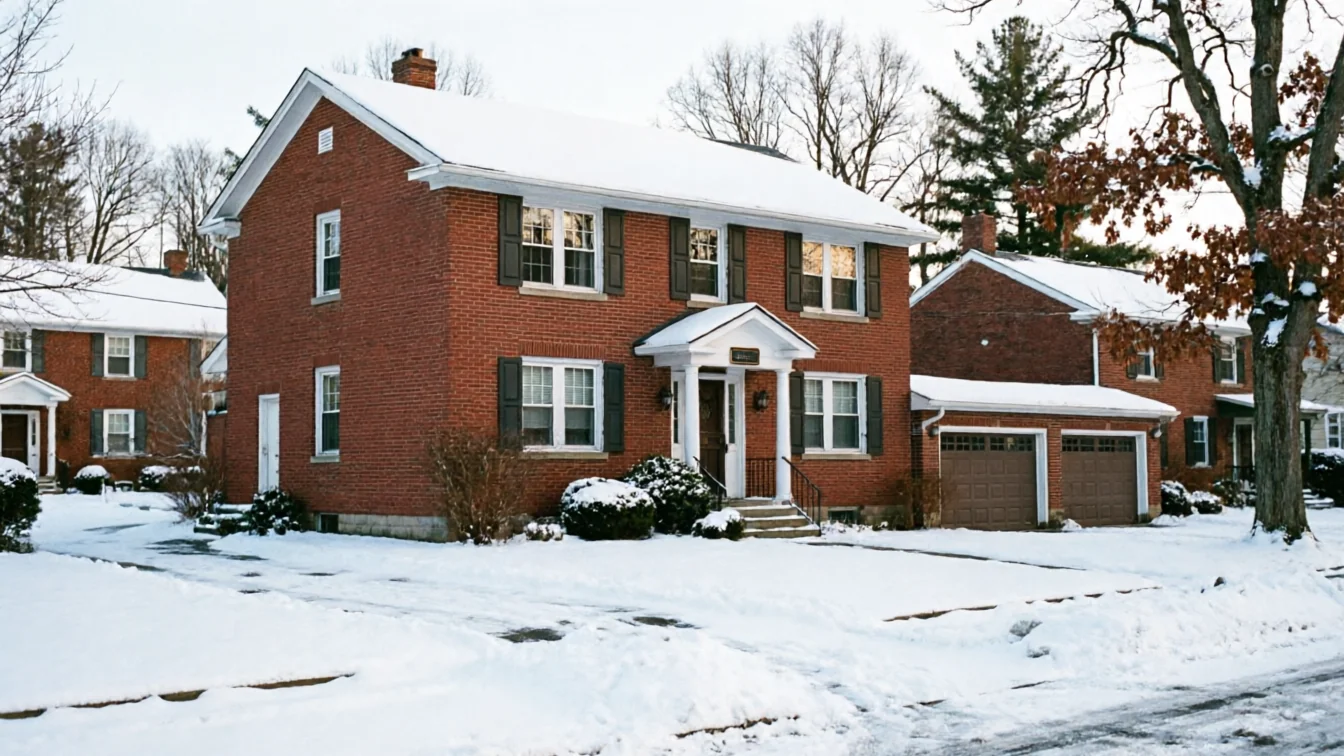
East Glenville has about 4,912 households, and the median income here runs around $86,023 - noticeably higher than the roughly $79,894 median across the wider service area. That tracks with a lot of the housing: these are generally solid, well-kept single-family homes built in the mid-1960s, often with attached two-car garages rather than the detached one-car setups you see on older stock elsewhere in the area.
What that means for garage door work is fairly direct. Two-car openings mean wider doors, which puts more load on the spring system and makes the difference between a torsion and extension setup more noticeable when something fails. It also means owners here are more likely to be looking at a full door replacement when the original steel panels are 55-plus years old, rather than a patch job - not because the budget demands it, but because the door itself is past the point where parts are worth sourcing.
Frequently asked questions
Why does the age of my garage door matter if it still opens?
A door that still opens can still be close to failing. Doors built around the 1966 era in East Glenville often run extension springs without safety cables, and those springs don't give much warning before they let go. If yours is original to the house, it's worth having the spring and cable setup checked even if nothing seems wrong yet.
Do you have a shop in East Glenville?
No. We work out of Saratoga Springs, about 16 miles away, and we travel to East Glenville for calls. We don't promise a response time we can't back up over that distance - we schedule the trip and bring the parts likely to match a door from this area's build era.
Is it worth repairing a 1960s steel door instead of replacing it?
Sometimes, if the panels are sound and it's just a spring, cable, or roller issue. But original steel sections from that era aren't manufactured anymore, so a damaged panel usually means replacement rather than a matching part. We'll tell you straight which side of that line your door is on.
Why do extension springs fail more in winter?
Cold steel loses tension faster, and extension springs in this climate band take a beating over a winter's worth of expansion and contraction. A spring that was marginal in October often finally goes in January or February, which is why winter calls for broken springs are common on original 1960s hardware.
Garage door services in East Glenville
Every service our crew runs in East Glenville, NY.
Book garage door service in Saratoga Springs
Call now or request a quote - tell us what the door is doing and where you are.